Case file 006 · Behaviorism
B. F. Skinner
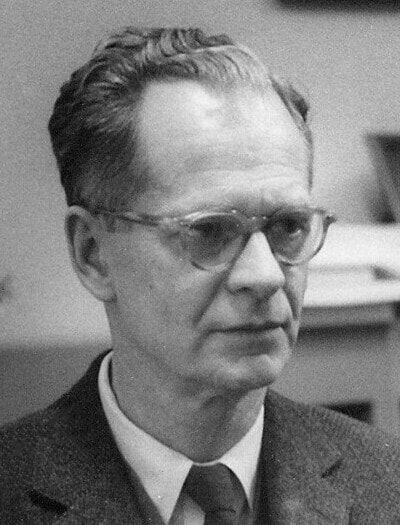
Fig. 1 — CC BY 3.0 · Photo: Silly rabbit
.jpg)
Eight pigeons, each in its own box, get food every fifteen seconds — regardless of what they happen to be doing. Before long one is turning counter-clockwise in circles, another thrusts its head repeatedly into a corner, a third bobs its head like a pendulum. Burrhus Frederic Skinner called the 1948 paper Superstition in the pigeon and claimed: this is how superstition arises.
Skinner was born on 20 March 1904 in Susquehanna, Pennsylvania, a lawyer’s son, in a home he himself described as warm and stable. The boy built: wagons, rafts, steam cannons, a perpetual-motion machine that did not run, and a contraption that reminded him by a sign to hang up his pyjamas. The biographers like to quote this list because it anticipates the work: Skinner’s psychology was an engineer’s psychology from the start — where others built theories, he built apparatus.
First, though, he wanted to be a writer. He read English literature at Hamilton College, sent Robert Frost some stories and received an encouraging reply; the year afterwards at his parents' house, dedicated to literature, he later called his “dark year” — he discovered, as he put it, that he had nothing to say. Reading brought the turn: Bertrand Russell’s essays on Watson, then Watson and Pavlov themselves. In 1928 he went to Harvard to study psychology — resolved to treat behaviour as physics treats its subjects: as a fact of nature with laws. He took his doctorate in 1931 and stayed five more years as a researcher; in that time chamber, recorder and the first curves came into being.
His contribution was an apparatus. The operant chamber the field names after him — he himself never liked the name “Skinner box” — couples a response to a consequence and records it; the cumulative recorder turns it into a curve whose slope is the response rate. With it, behaviour could be measured continuously instead of counted in trials. In 1938 appeared The Behavior of Organisms, the foundation; professorships in Minnesota and Indiana followed, and in 1948 the return to Harvard, where he stayed to the end.
The applications always ran alongside the laboratory. In the Second World War, in Project Pigeon, he trained pigeons to steer missiles onto targets — the military tested it and chose radar. For his second daughter he built the “baby tender” in 1944, an air-conditioned crib that a magazine article made famous as “Baby in a Box” and distorted into legend. In the 1950s he designed teaching machines and programmed instruction — small steps, immediate feedback, one’s own pace — an idea that failed in the classroom of its day and runs on in every learning app of the present.
And he wrote, the failed novelist, for a broad public all his life. Walden Two of 1948, the novel of a community planned by behavioural science, became the template of real communes in the 1960s — Twin Oaks in Virginia exists to this day, though long since off plan. Beyond Freedom and Dignity of 1971 stood for months on the bestseller lists and earned him the charge of abolishing free will; Skinner replied that it had never existed, and the book delivered the critique of behaviourism its bogeyman free of charge. Time magazine put him on the cover; the field voted him in surveys the most influential psychologist of the century — both in the same decade in which the cognitive turn was superseding his programme.
Harvard, incidentally, has preserved his workplace, chamber and recorder included — the museum piece of an era the field has left behind and whose tools it has kept.
The continuation of the work stayed in the family: his elder daughter Julie Vargas became a behavioural scientist herself and to this day leads the B. F. Skinner Foundation, which cares for the estate and the reprints.
On himself he kept records as on his pigeons: the autobiography grew to three volumes — Particulars of My Life, The Shaping of a Behaviorist, A Matter of Consequences —, written in a self-built basement study with a timer and a counter for the daily writing hours. The behavioural scientist as his own experimental animal, down to the footnotes.
Skinner died on 18 August 1990 in Cambridge, Massachusetts, of leukaemia — eight days after speaking for the last time, standing and without a manuscript, at the convention of the American Psychological Association, which had just given him its first ever citation for a lifetime’s contribution. He finished the paper for that address on the evening before his death. As his system demanded, he had kept working to the final consequence.
Pavlov’s dog learns what follows what. Skinner’s question was different: how does an organism learn what its own actions bring about? The conditioned reflex explains salivation, but not why a rat presses a lever no one has shown it. Edward Thorndike had formulated the law of effect for this around 1900 — behaviour with agreeable consequences becomes more frequent — but he had measured it in escape boxes, with a stopwatch, in discrete trials. Skinner took Thorndike’s law and built it a measuring instrument that did without trials. He himself dated the beginning to his Harvard years around 1930, in which, as he later wrote, he chiefly did one thing: invent apparatus that left the animal in peace.
The set-up he built for it is the real contribution. In the operant chamber the animal sits alone with a lever or a key, a food dispenser and sometimes a signal lamp. There are no trials, no experimenter presenting anything — the animal acts when it will, and the apparatus records. The cumulative recorder draws every response as a small step upward; the slope of the curve is the rate. The Behavior of Organisms of 1938 introduced this quantity as the basic measure of behaviour and distinguished the operant fundamentally from the reflex: in the reflex the stimulus precedes, in operant behaviour the consequence follows — and shapes what happens next. That the rat presses “of its own accord” is no longer a nuisance variable but the subject itself.
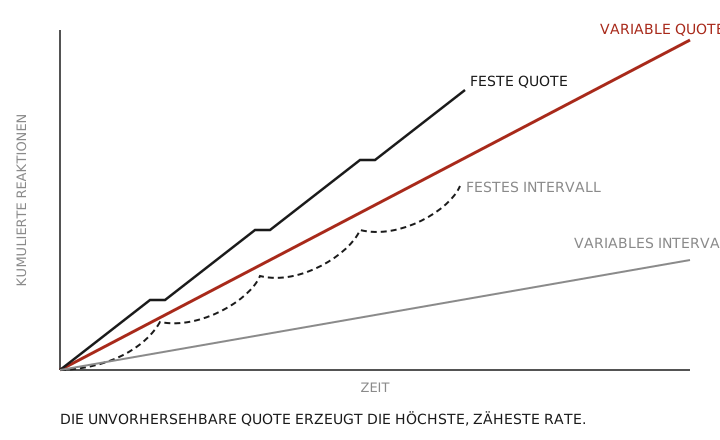
With this a question could be asked that was not measurable before: what happens when reinforcement does not come every time? The impetus was, by tradition, banal — one weekend the food pellets threatened to run out, and Skinner stretched them by no longer rewarding every press. The systematics he delivered with Charles Ferster in 1957 in Schedules of Reinforcement, a book consisting essentially of curves: fixed ratio, variable ratio, fixed interval, variable interval — each schedule produces its own recognisable pattern, from the scalloped profile of the fixed interval, where the animal pauses after each reward and accelerates before the next, to the uniformly steep line of the variable ratio. The most important finding: variable schedules produce the highest rates and the greatest resistance to extinction. Whoever is rewarded only sometimes and unpredictably stops last. That is the mechanics behind slot machines and behind every feed that can be pulled downward — the designers of the attention economy rarely cite Skinner and always use him.
The vocabulary the 1938 book introduced — reinforcement, extinction, shaping, behavioural repertoire — has long since become everyday language; hardly anyone who says “positive reinforcement” still knows they are quoting a measure from a rat chamber.
From the same workshop comes shaping: behaviour not present in the animal’s repertoire is built up in steps of approximation, by reinforcing first every turn toward the key, then every touch, then only the peck. With this technique Skinner and his co-workers taught pigeons to peck targets, to play a kind of table tennis, and in the Second World War very nearly to steer missiles — Project Pigeon was tested, funded and finally shelved in favour of radar. Shaping is the bridge from the chamber into application: it is the same procedure by which dolphins are trained today, prosthetic grips practised, and behavioural repertoires built in therapy.
To the case file also belongs the pigeon experiment of 1948 — and what became of it. Eight pigeons received food every fifteen seconds regardless of what they were doing; six developed a fixed ritual — counter-clockwise turns, head-thrusting, pendulum swings. Skinner’s reading: the animal takes whatever it happened to be doing at the moment of feeding for the cause — thus, too, arises human superstition. John Staddon and Virginia Simmelhag repeated the experiment in 1971 with closer observation and came to a different conclusion: the movements are species-typical, not individually acquired — pigeons in a waiting state before food show a fixed repertoire anyway. The pigeon’s superstition is thus no superstition but food-anticipatory behaviour that chance merely accentuates. The study counts as a model case of an elegant interpretation failing against a closer observation — and it struck the programme at a tender spot, for at the same time the Brelands, Skinner’s former co-workers, reported the same problem from their animal-show business under the title “The Misbehavior of Organisms”: raccoons that would not deposit coins but washed them. Biology had a say in learning, and the apparatus had not provided for it.
The chamber meanwhile became the all-purpose instrument of other people’s programmes. Richard Herrnstein distilled the matching law from pigeons at two keys in 1961 — organisms distribute their behaviour in proportion to the rates of reinforcement —, the first quantitative behavioural equation, cited down to today’s neuroeconomic modelling. James Olds and Peter Milner found self-stimulation of the rat brain in 1954 with operant methodology: animals pressed for hours for electrical pulses into their own reward system — the beginning of reward research, which mapped Skinner’s black box from inside. And in clinics, reinforcement schedules became token economies, coin systems for psychiatric wards, whose balance came out mixed and whose ethics are debated to this day. The apparatus proved more neutral than its builder had claimed: it also measures what, according to the programme, was not supposed to exist.
The textbook version also likes to tell that Skinner raised his daughter Deborah in such a chamber and that she was broken by it. Both are false. The “baby tender” — unhappily christened “Baby in a Box” by the magazine that reported on it in 1945 — was an air-conditioned, glazed crib without any reinforcement mechanics, a piece of furniture, not an experiment. Deborah Skinner Buzan is an artist, lives in London, and contradicted the story in a newspaper piece of her own in 2004, after a book had once again declared her dead or litigating. That the legend runs on regardless is itself a lesson in reinforcement: it is too tellable to extinguish.
As a measuring technique, too, the chamber made a career far beyond learning theory: behavioural pharmacology adopted the response rate as the standard measure of a substance’s effects — whether a compound sedates, disinhibits or addicts is pre-tested to this day in lever presses per minute, in chambers that differ from 1938 only in their electronics. It is the quietest form of afterlife: as laboratory equipment in studies that no longer mention the builder’s name.
The variable-ratio schedule has become most visible outside the laboratory, and precisely where money is involved. A machine that pays out after a number of stakes fixed on average and unpredictable in the individual case implements exactly the schedule that produces the highest and most extinction-resistant rates in animal experiments; the design is older than Skinner’s formulation, and his concepts made it explicable. The same structure is found again in the interfaces built on notifications and refresh gestures, and it is discussed accordingly in addiction research. The transfer remains contested — more than an analogy lies between a reinforcement schedule and a behavioural addiction — but the prediction of which schedule makes behaviour most persistent comes from the chamber.
What stands today: the basic regularity, to an extent that knows few comparisons. Reinforcement schedules reproduce across species — rat, pigeon, monkey, human —, behavioural economics has computed Skinner’s curves into demand functions, and applied behaviour analysis carries effective procedures into education and the treatment of autism spectrum conditions — together with its own continuing debate about their aims and limits. What does not stand is Skinner’s claim to explain language too without inner structure: Noam Chomsky’s demolition of his book Verbal Behavior in 1959 — with the argument that children form sentences that were never reinforced because they were never heard — counts as one of the starting lines of the cognitive turn. The irony of the balance sheet: the apparatus and the curves outlived the claim they were built for. Skinner wanted to show that the inside does not matter; what remains is a tool with which one measures today how the inside computes — the most complete defeat ever to enter the instrument cabinet as a victory.
Of everything Skinner described, one finding is the most visible today without his name ever coming up: irregular reward works more strongly than regular.
The logic runs against intuition. You would expect a behaviour rewarded every time to sit most firmly. In the laboratory the opposite is the case. Reward every lever press and then stop, and the animal quickly gives up — the change is immediately recognisable. Reward on average every tenth press, but unpredictably which, and a long run without success is nothing unusual. The animal has learned that absence means nothing. And goes on pressing.
Exactly this pattern sits in slot machines, in loot boxes and in every feed that can be pulled down to refresh. The pull is the response, the occasionally interesting post the reinforcement, and the unpredictability ensures that absence is no signal to stop. Skinner described it in pigeons in 1957. That it would become a design method for screens he did not live to see — though he did anticipate it in Walden Two.
Replication status: replicated.
Operant conditioning and the effect of reinforcement schedules are among the most robust findings in psychology. They are reproduced across species, laboratories and decades, and the characteristic curve shapes of the individual schedules appear so reliably that they serve to calibrate apparatus. The status applies to the mechanics. It does not apply to Skinner’s account of language acquisition, nor to the reading of the 1948 pigeon experiment, which was corrected in 1971.
Primary work:
- Skinner, B. F. (1938). The Behavior of Organisms. Appleton-Century. — The operant chamber, the cumulative recorder, the separation of respondent and operant behaviour.
- Ferster, C. B., & Skinner, B. F. (1957). Schedules of Reinforcement. Appleton-Century-Crofts. — The systematic test of the schedules.
- Skinner, B. F. (1948). Superstition in the pigeon. Journal of Experimental Psychology, 38(2), 168–172. — The eight pigeons.
Correction and criticism:
- Staddon, J. E. R., & Simmelhag, V. L. (1971). The superstition experiment. Psychological Review, 78(1), 3–43. — The repetition with closer observation; reinterprets the rituals as species-typical behaviour.
- Chomsky, N. (1959). A review of B. F. Skinner’s Verbal Behavior. Language, 35(1), 26–58. — The objection at which the cognitive turn takes its start.
- Buzan, D. S. (2004). I was not a lab rat. The Guardian, 12 March 2004. — Skinner’s daughter on the legend of the child in the box.
Application:
- Cooper, J. O., Heron, T. E., & Heward, W. L. (2020). Applied Behavior Analysis (3rd ed.). Pearson. — The state of applied behaviour analysis.
German-language:
- Skinner, B. F. (1973). Wissenschaft und menschliches Verhalten. Kindler, Munich. — Translation of Science and Human Behavior (1953).
Overview: https://en.wikipedia.org/wiki/Operant_conditioning