Case file 034 · Development
Eleanor J. Gibson
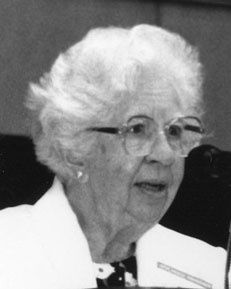
Fig. 1 — CC0 · Association for Psychological Science · Wikimedia Commons
.jpg)
Eleanor Jack was born in Peoria, Illinois, in 1910 and discovered experimental psychology at Smith College. There she met James J. Gibson, the future perception researcher and her husband. She completed a doctorate under Clark Hull at Yale in 1938 — but as a woman could not attend his seminars in a building reserved for men.
When Cornell appointed James Gibson in 1949, Eleanor received no regular post. Working around that barrier shaped her research. Without a laboratory of her own, she sought questions that could be studied with animals, children, and simple apparatus. With Richard Walk she devised the visual cliff, a glass table that made a drop visible without allowing an actual fall.
The famous photograph of an infant at an apparent precipice hides the breadth of her work. Gibson studied perceptual learning, reading, and the coordination of perception and action. Learning, for her, did not mean enriching the world with ever more internal images but discovering relevant differences in the environment with increasing precision.
She later became a professor at Cornell, was elected to the National Academy of Sciences in 1971, and received the National Medal of Science in 1992. She died in 2002. Her career is also a story of how institutions obstruct research — and how a scientist built a new programme from the margins of a system.
The apparatus is a lesson in experimental design. A table is covered with strong glass. A checkerboard pattern lies directly beneath one half; beneath the other, the same pattern drops to the floor. To the eye there is a cliff; for hands and knees the surface remains level.
Gibson and Richard Walk reported in 1960 on 36 crawling infants and comparative tests with several animal species. Most children crawled onto the shallow-looking side; few crossed the deep-looking side even when their mother called from it. Many animal species also showed edge-specific behaviour timed to their ecological way of life.
The popular conclusion was that depth perception and fear of heights are innate. The original study could not show that for humans. A self-locomoting infant already has weeks of visual and motor experience. Perception, fear, and action are also different things. Younger infants react physiologically to depth without avoiding it like experienced crawlers, and children must recalibrate risk when they shift from crawling to walking.
Later work, including research from Gibson’s own group, therefore made the cliff a subtler story. Children do not learn an abstract “fear of heights”; they learn relations among body, posture, and surface. A slope that is safe to crawl may be too steep to walk. Experience in one form of locomotion does not transfer completely to the next.
The core finding stands: children use visual depth information to guide movement. The status is partial because the textbook nature-versus-nurture moral does not. Gibson’s enduring question is better: what information does this environment offer this body for this action?
A step has a height in centimetres. Whether it is “climbable” is not written in the concrete. It depends on the person’s leg length, strength, balance, and experience. Gibson called such a relation an affordance — a possibility for action that an environment offers a particular organism.
The term guards against two shortcuts. Perception is not merely an image in the head; it serves action. And an environmental property is not the same for every body. A low edge can be a seat, an obstacle, or nothing at all, depending on who approaches and what they can do.
Design later used “affordance” as a synonym for a visible cue. Gibson’s meaning is stricter. A handle may permit pulling even if nobody understands it; a painted handle may suggest pulling although it cannot be pulled. Possibility and cue are not the same.
Replication status: partial.
The use of visual depth information is robust. What changed is the strong textbook claim that the visual cliff proves an innate fear of heights. In human infants, edge avoidance depends substantially on self-produced locomotor experience and current posture.
Primary sources:
- Gibson, E. J., & Walk, R. D. (1960). The “visual cliff”. Scientific American, 202(4), 64–71.
- Walk, R. D., & Gibson, E. J. (1961). A comparative and analytical study of visual depth perception. Psychological Monographs, 75(15), 1–44.
- Adolph, K. E., Eppler, M. A., & Gibson, E. J. (1993). Crawling versus walking infants' perception of affordances for locomotion over sloping surfaces. Child Development, 64, 1158–1174.
- Adolph, K. E. (1997). Learning in the development of infant locomotion. Monographs of the Society for Research in Child Development, 62(3).
Historical context:
- Rodkey, E. N. (2015). The visual cliff’s forgotten menagerie. Journal of the History of the Behavioral Sciences, 51, 113–140.