Case file 023 · Development
Jean Piaget
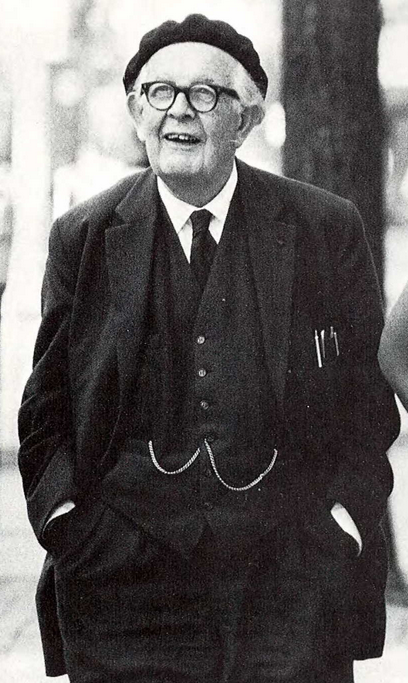
Fig. 1 — Public domain · Wikimedia Commons

The first scientific paper of this life appeared when its author was ten: a short note on an albino sparrow in the park of Neuchâtel, submitted, as Piaget later told it, so that the librarian of the natural history museum would finally take the boy seriously and let him into the collections. Dozens of papers on molluscs followed before he left school — so many that the Geneva museum offered him by letter the curatorship of its mollusc collection, unaware that the candidate was still a schoolboy. Whoever wants to understand how this researcher later questioned children must know the boy who classified snails: Piaget spent his life building orders and testing how orders come about.
Piaget was born on 9 August 1896 in Neuchâtel in French-speaking Switzerland, the son of a historian whose rigour with sources he praised, and of a mother whose mental distress he named as one impetus for his choice of profession. He took his doctorate in natural science in 1918 — on the molluscs of the Valais —, brushed against philosophy and psychoanalysis in a period of crisis, and found his question in Paris: in Théodore Simon’s laboratory, working on test series in the Binet tradition, he was to standardise children’s answers and instead began to take an interest in the wrong ones. Children do not err at random, he saw there — they err systematically, at the same age in the same way. Error became his window into thinking.
In 1921 Édouard Claparède brought him to the Institut Jean-Jacques Rousseau in Geneva, and the stopover became half a century. The early books — on the child’s language and thought, judgment and worldview — made the man in his late twenties internationally known; the clinical method, patient questioning along the child’s own logic, became his trademark against the yes-no grids of the testing industry. Then came the family laboratory: with his wife Valentine Châtenay, a former student, he observed their own three children — Jacqueline, Lucienne, Laurent — from the first week of life, record upon record. Out of these notebooks came the volumes on the birth of intelligence and the construction of reality in the child: sensorimotor development in six stages, object permanence, the famous search errors — world literature of behavioural observation, won on a sample of three.
The late work built an architecture from this: stages of thought from the preoperational through the concrete-operational to the formal, tested on the conservation tasks his Geneva laboratory developed in series — poured liquids, rolled-out clay balls, spread-out rows of buttons. Piaget never understood himself as an educator and scarcely as a psychologist, but as a genetic epistemologist: the children were his empirical access to Kant’s question of how knowledge is possible. In 1955 he founded in Geneva the Centre International d’Épistémologie Génétique, where logicians, physicists and psychologists worked each year on one basic concept — number, space, time, chance — and the bibliography grew to an extent his biographers can only estimate.
The most famous encounter of his career took place at Royaumont in 1975: Piaget against Noam Chomsky, the constructivist against the nativist, three days on the question of whether knowledge is built or brought along. No one decided it — the records of the quarrel read as a table of contents for the developmental psychology of the following fifty years.
His own field he called not psychology but genetic epistemology: the question of how knowledge arises, put empirically. For it he founded in 1955 an international centre in Geneva in which mathematicians, logicians, biologists and psychologists worked year by year on a common question — a form of work that scarcely existed a second time, and one that explains why his books jump back and forth between child protocol and formal logic. Alongside this he directed for more than two decades the International Bureau of Education in Geneva, later absorbed into UNESCO; a considerable part of his influence on curricula runs not through psychology but through this second career in education policy.
World fame came late and by detours: American psychology, busy with behaviour curves, discovered the Genevan only in the 1960s, when the cognitive turn found use for a thinker who described the child as a small scientist. But then completely — scarcely a developmental textbook in the world does not begin with him, and progressive education made of the epistemologist a patron saint of discovery learning, which he himself regarded with reserve.
Piaget died on 16 September 1980 in Geneva, aged eighty-four, and was buried without ceremony at his own wish. The picture the obituaries held fast had been the same for decades: the gentleman with the beret and the pipe who went alone into the Alps every summer to write the year’s books — a man who studied the development of thinking by never stopping himself.
The question Piaget answered in the 1930s no one before him had held to be empirical: how does a person know that the world consists of durable things — that the cup behind one’s back goes on existing, that quantities remain what they are when poured? Philosophy had two ready answers, innate or imprinted; Piaget replaced both with a third that could be observed: knowledge is built, piece by piece, in an order that can be recorded. His laboratory was his own nursery, his sample was called Jacqueline, Lucienne and Laurent, and his instruments were a pocket watch, a cloth and an inexhaustible patience.
The most famous scene of the records is disarmingly simple. Show a seven-month-old a desired toy and cover it before its eyes with a cloth: the child, a moment ago ready to grasp, withdraws its hand and turns away, as if the object had ceased to exist. A few months later it searches under the cloth — but it searches wrongly: hide the toy several times at place A and then visibly at place B, and at nine or ten months the child reaches persistently for A again, the site of earlier success. This A-not-B error became the most-studied search error in developmental psychology; for Piaget it was proof that object permanence — the certainty of enduring things — is no starting capital but a construction completed in the second year.
The records are not anecdotes but series. Piaget varied systematically: with one cloth, with two, with visible and invisible displacement, with delays between hiding and letting the child reach; he described six stages of sensorimotor development from the reflexes through circular reactions to inner representation, and dated each to observations with number, date and the child’s age. The procedure is natural history in the best sense — the mollusc collector’s method applied to his own living room — and it has the advantage of all good natural history: one can do it again, and thousands have.
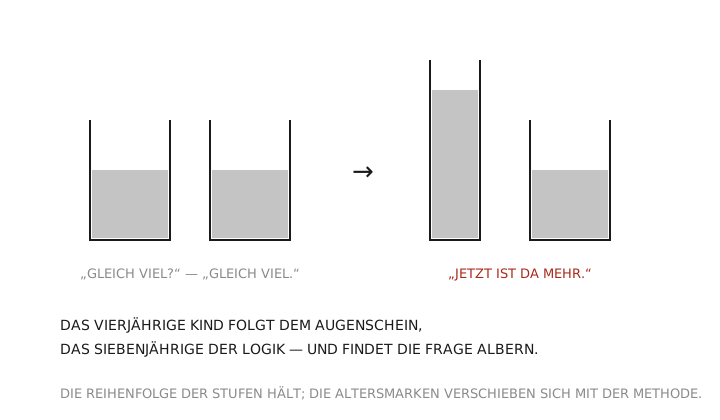
The second family of tasks tested the construction on the preschooler: conservation. Two identical glasses, filled to the same height; one is poured, before the child’s eyes, into a narrow tall glass. The five-year-old says there is now more — it stands higher; the seven-year-old laughs at the question: it is the same water. Between them lies, for Piaget, the acquisition of the operation — the action reversible in the head — and with it the threshold from preoperational to concrete-operational thought. The Geneva series declined this through quantity, number, weight and volume and found the same order everywhere; the doctrine of stages that grew from it made a developmental clock out of children’s answers.
Two further observational classics belong to the same workshop and are seminar material to this day. The three-mountains task tested whether a child can distinguish a doll’s view from its own: the four-year-old regularly picks its own picture — Piaget’s egocentrism, meant as standpoint-boundness, not selfishness. And class inclusion asked whether, among ten flowers of which seven are roses, there are more roses or more flowers; the five-year-old says: more roses. Both tasks have their own history of revision — with policeman dolls instead of mountains, even three-year-olds show perspective-taking — and both live on in research on theory of mind, which puts Piaget’s question about the other’s standpoint with sharper tasks.
The reception ran in two waves half a century apart. At first the Genevan remained a European special case — American learning psychology had no use for constructing children. With the cognitive turn he was then canonised, and in the form this archive by now knows: smoothed. Out of the stages with their transitions, shifts and regressions that Piaget described, the textbooks made a timetable with departure times; out of the clinical method with its groping follow-up questions, a set of standard tasks. The criticism that set in from the 1970s therefore often hit the textbook version harder than the original — but it hit.
Two attacks carry the archival turn. The first came from Edinburgh, with a cheeky teddy bear: Margaret Donaldson and James McGarrigle had the row of buttons rearranged not by the experimenter but knocked about by a “naughty teddy” — and suddenly markedly more five-year-olds conserved the quantity. If an adult deliberately rearranges and then asks again, runs the reading, children take the question as a hint that the answer is supposed to change — the task also measures conversational logic, not only logic of thought. The second attack came from the infant laboratory: Renée Baillargeon replaced reaching with looking and found, with looking-time methods, that five-month-olds already stare longer at physically impossible events — at the screen that passes through the place where the hidden object ought to stand. Where reaching shows knowledge only at nine months, looking shows it at five; Piaget’s clock ran slow because his hand was the pointer. Infancy research of the following decades built a whole field of early competences on this trick — and drew its own headwind in the replication crisis, because looking times are moodier than grasps; the debate over how much physics is in the infant is open.
The theoretical core has had a harder time than the phenomena. Piaget’s explanation — assimilation and accommodation, which in the process of equilibration force new structures — describes the transition without predicting it: when exactly does a child tip, and why this one and not that? Successor research made two programmes of it. Robert Siegler replaced the staircase with overlapping waves: children command several strategies at once, and development is the shifting of their frequencies — measurable microgenetically, session by session. And the core-knowledge research around Elizabeth Spelke reversed the starting assumption: instead of an infant that builds everything, an infant with small innate systems for objects, numbers and agents on which learning is built. Both programmes contradict Piaget in substance and use his questions.
A word on this file’s arithmetic: Piaget’s numbers are not statistics. The sensorimotor volumes give observation numbers and ages in days, not means; the conservation series report rates from Geneva school classes without random sampling and without significance tests — the field calculated differently then, and Piaget calculated little even then. What carries his findings is not statistical power but the repeatability of the scene: any nursery teacher can stage the pouring and get the same answer. It is the same kind of durability that carries Ebbinghaus’s syllable rows in this archive — transparency beats sample size.
A question Piaget found tiresome has driven the testing of his model further than any criticism. American research groups wanted to know whether the stages can be accelerated: can a four-year-old be taught conservation of quantity? The answer came out mixed and was uncomfortable for both sides. Training works — children afterwards solve the trained task correctly more often — but the transfer to related tasks stays limited, and the gain depends on how close the child already was. Piaget himself held the question to be badly put: development is a construction, not a curriculum. A second test came from cross-cultural research, and it struck the topmost stage. Concrete operations appear everywhere, if with shifts of years; formal thinking, by contrast, shows itself above all where it is practised at school — which makes Piaget’s last stage more a consequence of schooling than an endpoint of maturation.
What stands today is therefore more differentiated than either camp tells it. The order holds: no finding shows conservation before object permanence or formal operations before concrete ones, and the sequence is confirmed across cultures — the clock times, by contrast, travel with method, material and culture, and the formal stage is no matter of course even in adults. The A-not-B error is one of the field’s most robust phenomena and has a research industry of its own in developmental neuroscience; the conservation tasks work to this day in every seminar. And Piaget’s core idea — that children are active constructors whose errors open windows into their thinking — has moved from special finding to the field’s matter of course: the sharpest critics of his clock times work with his tasks. A theory whose refutations inherit its tools has kept a rare form of being right.
The textbook version rarely names Piaget’s sample: the sensorimotor volumes, on which half of infancy research rests, are based on three children, and all three were called Piaget. The father was observer, theorist and experimenter in one; the mother, Valentine Châtenay, kept a considerable part of the records, which citation practice has forgotten as thoroughly as Rosalie Rayner and Nicole Harsch in the neighbouring folders.
The note records what this archive learns from it. First: the founding generation worked on what was near — Freud on himself, Klein and Piaget on their own children, Ebbinghaus on his memory. That is no scandal but an epoch; the scandal would be not to say so. Second: N of three has, like Ebbinghaus’s N of one, held astonishingly well — the search errors and stage sequences of the Piaget children have been rediscovered in thousands of other infants. What fails at small samples is rarely the carefully described phenomenon; it is the generalisation about clock times and mechanisms.
Third, and most practically: Piaget’s instrument was not the sample but the question. The clinical method — following the error instead of marking it wrong — has produced more developmental psychology than any grid of norms. One can raise a world-building on three children if one listens to them properly; one cannot on three thousand if one only counts answers.
Replication status: partial. The phenomena and the order of the stages are confirmed many times and across cultures; the ages and the mechanism are not — with looking-time methods, object knowledge shows months earlier, and conservation rates tip with the phrasing of the question.
Primary sources. Piaget, J. (1936). La naissance de l’intelligence chez l’enfant; id. (1937). La construction du réel chez l’enfant. Neuchâtel: Delachaux et Niestlé. — The sensorimotor volumes from the records of his own three children. Piaget, J., & Szeminska, A. (1941). La genèse du nombre chez l’enfant. — The conservation series.
The revisions. McGarrigle, J., & Donaldson, M. (1974). Conservation accidents. Cognition, 3(4), 341–350. — The naughty teddy: the task also measures conversational logic. Baillargeon, R., Spelke, E. S., & Wasserman, S. (1985). Object permanence in five-month-old infants. Cognition, 20(3), 191–208. — Looking times instead of reaching; knowledge comes earlier. On the counter-criticism of looking-time methods and their replication record, see the ongoing debate in infancy research.
Standing. The A-not-B error and the stage sequence count as robust; classic cross-cultural comparisons confirm the sequence with shifting age markers. Overview: Siegler and successors on the microgenetics of strategy change — the modern version of Piaget’s transitions.