Case file 033 · Psychoanalysis
Karen Horney
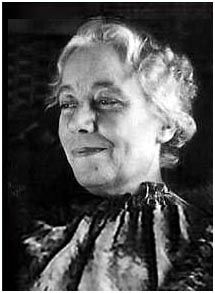
Fig. 1 — GFDL / CC BY-SA 3.0 · Photo: Fredy Crevanna, 1938 · Wikimedia Commons

Karen Danielsen was born near Hamburg in 1885 and belonged to the first generation of women able to study medicine regularly in Germany. She qualified in Berlin in 1913, trained in psychoanalysis, and taught at the Berlin Psychoanalytic Institute from 1920.
Her break with orthodoxy began with its account of women. Freud described female development from a male model; Horney asked how much of his theory reflected biology and how much women’s social dependence. The later popular phrase “womb envy” is often attributed to her but was not her guiding term. Her stronger objection was methodological: a theory that makes male experience the norm can only discover female experience as deviation.
In 1930 Horney emigrated to the United States with her three daughters. After posts in Chicago and New York she also separated institutionally from classical psychoanalysis. In 1941 she helped found the Association for the Advancement of Psychoanalysis and the American Institute for Psychoanalysis.
Her mature books described neurosis as a rigid response to basic anxiety. People move toward others, against them, or away from them. Health means being able to move among these possibilities; neurosis is the compulsory rule of one. Horney died in New York in 1952. Her work sits between clinical observation and theory — historically consequential, but not replicable as an experiment.
Horney’s theory begins not with a drive but a predicament. A dependent child experiences its surroundings as unsafe, unloving, or unpredictable. Attempts to create security grow from this basic anxiety. One can secure affection, assert power, or create distance — move toward people, against them, or away.
All three movements belong to ordinary social life. They become problematic when one turns compulsory. A person who may only seek closeness pays with submission; one who must always fight turns relationships into rankings; one who is safe only in retreat confuses independence with invulnerability. In Our Inner Conflicts (1945), Horney described how these directions contradict one another while operating within the same person.
In 1950 she added the “idealised self”: an image of what one must be to become unassailable. Self-contempt grows in the gap between this demand and the experienced self. Therapy should therefore not perfect the ideal but loosen compulsive claims and restore access to the “real self”.
The terms sound modern, but their status must remain clear. Horney derived them from treatments, literature, and clinical experience. She provided no scales, comparison groups, or predictions against which the three-part theory could fail. Later relational, attachment, and personality research studies related patterns under other names; that is compatibility, not retrospective proof.
The historical finding is firmer than the experimental one. Horney moved psychoanalysis from biology toward culture, from female “lack” toward male norm-setting, and from instinctual fate toward changeable ways of relating. Her theory remains influential as a thinking tool; as an empirical model it is underspecified.
Horney called it the “tyranny of the should”: I should always be calm. I must not need anyone. I have to be the cleverest person in every room. Such sentences look like goals but operate as threats.
The difference is flexibility. A goal can be changed, ranked, or missed. The neurotic should turns every departure into evidence of a worthless self. Even success becomes dangerous: it reassures briefly, then raises the next demand.
As a historical clinical idea this is not a diagnosis of perfectionism. It is a precise way to read the language of inner demands. “What do I want to achieve?” becomes “What do I believe I must be so that nothing can happen to me?” — a different question altogether.
Replication status: not applicable.
Horney’s main works are clinical theories, not controlled studies. Her concepts must not be treated as though modern factor analyses had confirmed the three directions of movement. What is documented are the texts, their institutional influence, and their early criticism of biological accounts of gender.
Primary sources:
- Horney, K. (1926). The flight from womanhood: The masculinity-complex in women, as viewed by men and by women. International Journal of Psycho-Analysis, 7, 324–339.
- Horney, K. (1937). The Neurotic Personality of Our Time. Norton.
- Horney, K. (1945). Our Inner Conflicts. Norton.
- Horney, K. (1950). Neurosis and Human Growth. Norton.
Biographical context:
- Quinn, S. (1987). A Mind of Her Own: The Life of Karen Horney. Summit.
- Paris, B. J. (1994). Karen Horney: A Psychoanalyst’s Search for Self-Understanding. Yale University Press.